
Case study
MinForskning
A healthcare consent platform where early UX work and a focused Figma prototype helped turn an uncertain rewrite into a larger product opportunity.
This was one of my first frontend consultant assignments at AFRY. The initial brief was practical and highly constrained: an aging admin app needed a complete rebuild, the deal was not yet sealed, and the team needed a credible estimate within a fixed, tight budget.
- Context
- AFRY Frontend Consultant assignment
- Discovery
- 2-week scoping, prototyping and estimate phase
- Role
- Lead Frontend Developer with UX/UI ownership
- Tools
- Figma, Angular, Stakeholder Collaboration
- Outcome
- Won the project and successfully expanded project scope
The assignment
I joined the project conversation before the client had committed. The team needed to understand what a rebuild could realistically take, how quickly we could move, and how to make the proposal feel concrete enough for stakeholders to trust.
I had not worked professionally in Angular at that point, so the interview included a very direct question: how would I learn it? My answer was straightforward: read the docs, build hands-on proof of concepts, and lean on the fact that product logic transfers even when framework syntax changes. The more decisive part of the conversation became Figma. When the project lead showed me the old system, we started discussing improvements immediately, and the meeting shifted from interview mode into first-day project mode.
UX research and product discovery
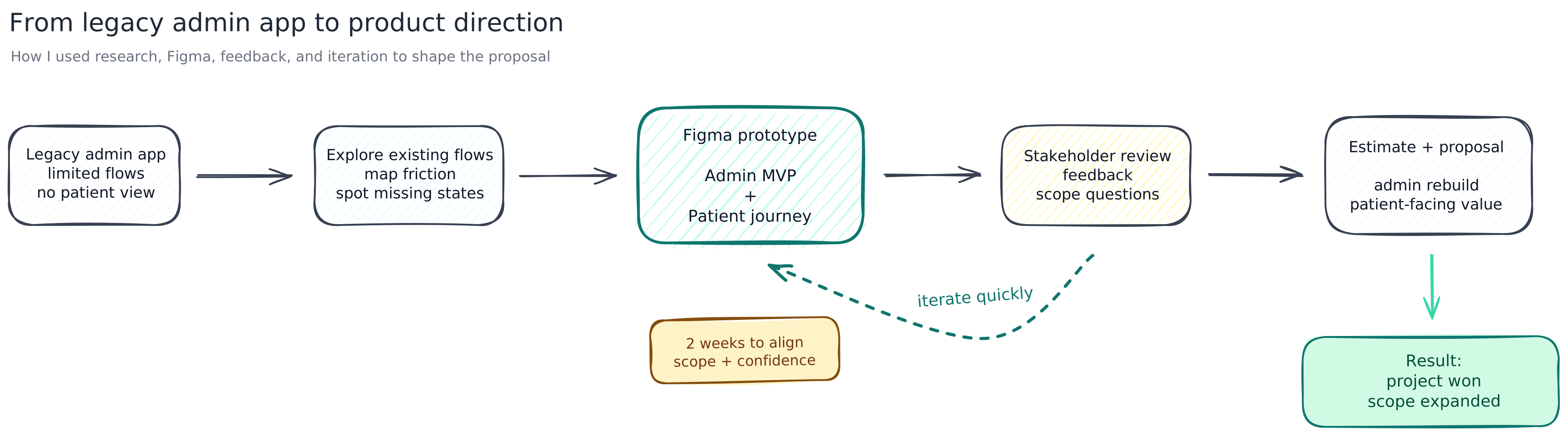
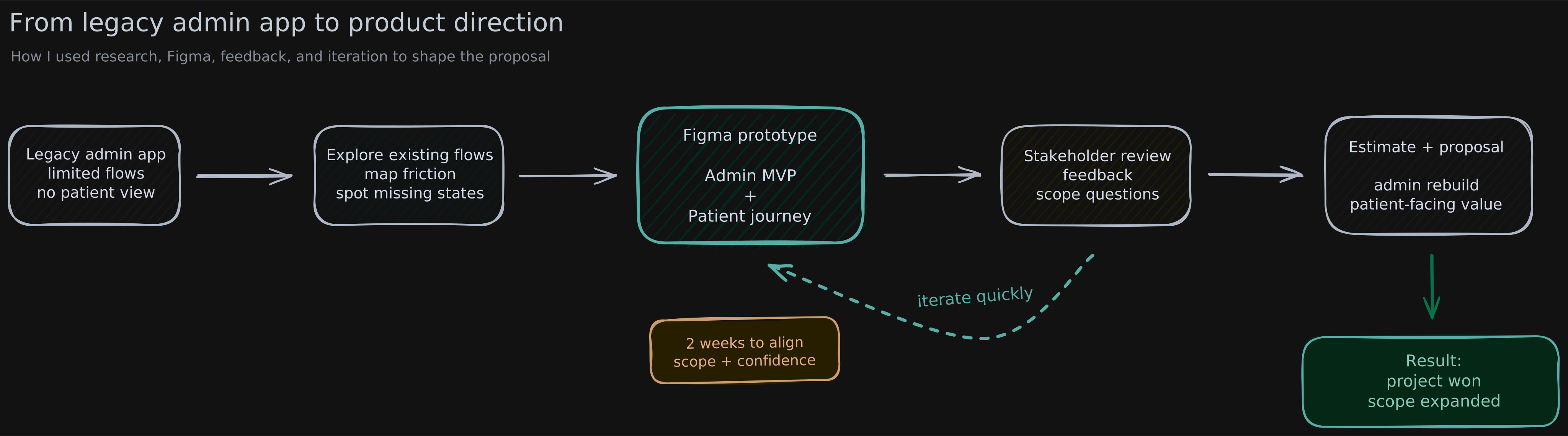
The old product was mainly an admin tool, with limited functionality and no meaningful patient-facing experience. To understand it, I opened the existing app and worked through it like a brand-new user: mapping core flows, identifying friction points, and questioning which features were essential for hospital staff versus what could be clarified for patients.
That exploration helped us avoid treating the work as a simple screen-for-screen rebuild. The admin app still needed to be practical and budget-aware, but the bigger opportunity was to show how the platform could support the full consent journey: from staff administration to patient communication, digital consent, messaging, and follow-up.
- Audited the legacy application hands-on to map workflows, identify missing edge states, and pinpoint where the user experience felt bottlenecked.
- Separated the essential admin rebuild from product opportunities that could make the platform more useful over time.
- Mapped what a patient-facing consent flow could add, including clearer guidance, messaging, and a calmer end-to-end journey.
- Used Figma to make the estimate tangible, so stakeholders could react to concrete flows instead of abstract scope.
The prototype
We had about two weeks to prepare the estimate and wanted to go further than a spreadsheet. I created Figma designs for the minimal admin rebuild, then added selected patient-facing flows to show what the product could become if the client invested beyond the bare essentials.
The goal was not to over-design the project. It was to make the proposal easier to evaluate, reduce uncertainty around scope, and give stakeholders a shared picture of the user experience they were actually buying.
- A focused admin experience covering the core rebuild needed for the first delivery.
- Patient-facing screens that showed how consent, communication, and follow-up could feel outside the admin tool.
- Future-facing concepts that helped the client understand where the product could grow once the essentials were in place.
Collaboration and trust
The work was shaped closely with the project lead and stakeholders. We kept the fixed budget in view while still making room for better product thinking: what must exist for the first delivery, what would make the system more usable, and what could justify a broader investment from the client.
That balance mattered. The Figma work gave the client something specific to respond to, while the estimate stayed grounded in an incremental delivery path rather than a polished fantasy version of the product.
Outcome
- The client chose AFRY after the estimate and Figma presentation.
- The patient-facing concept helped expand the conversation beyond a narrow admin rewrite.
- The budget increased because stakeholders wanted the broader product direction included.
- What was initially discussed as a 4-month project became a nearly 2-year collaboration.
Internally, it was a meaningful win for the team and a strong start to my consultant work at AFRY. For me, the case still stands out because it combined frontend adaptability, UX research, visual communication, and product judgment in a moment where trust had to be earned quickly.